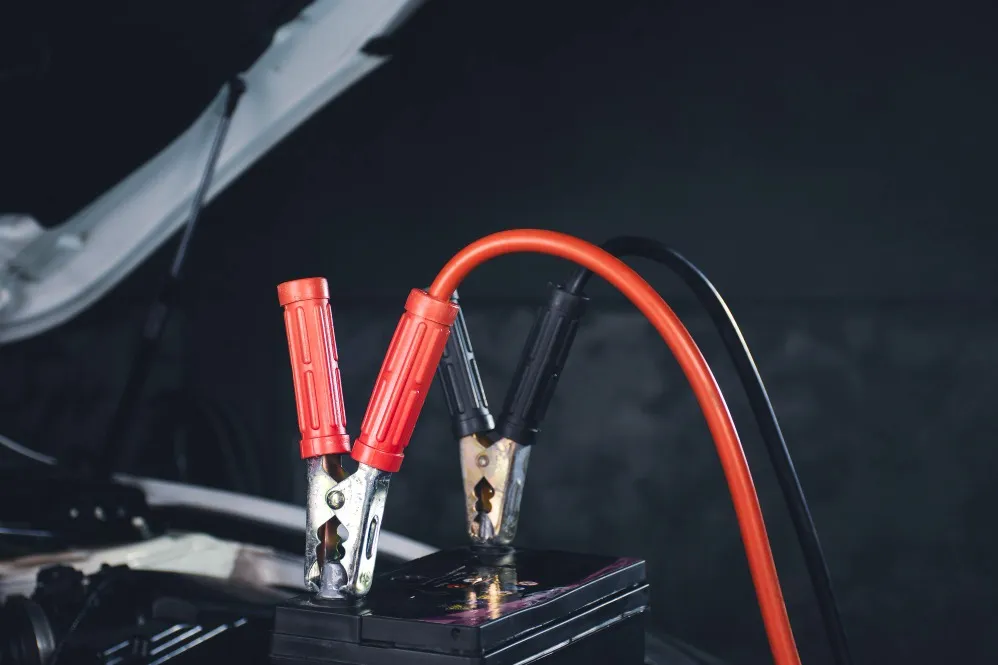
Battery connections may be short compared with other electrical cable runs, but they can carry substantial current. This makes Battery Wires an important component in automotive systems, electric vehicles, battery-powered equipment, backup systems, and industrial machinery.
Correct selection depends on current, conductor construction, cable length, flexibility, insulation, and termination quality.
High Current Requires Correct Sizing
Battery circuits can carry significant current, particularly during starting, charging, or high-load operation.
An undersized conductor can create excessive resistance, heat, and voltage drop.
Cable size should therefore be determined using the application's maximum expected current, cable length, permissible voltage drop, duty cycle, and operating temperature.
Short Runs Still Need Attention
It is tempting to assume that a short battery cable does not require detailed engineering.
However, even small resistance increases can matter in high-current circuits.
Connections, terminals, conductor quality, and crimping can all contribute to circuit resistance.
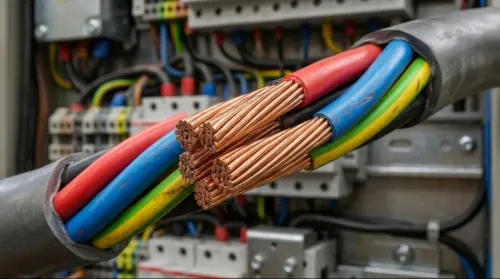
For this reason, both the wire and its terminations need to be considered as a complete electrical path.
Flexibility Helps Installation
Battery wires are often routed through compact spaces or connected to terminals where stiff cables would be difficult to position.
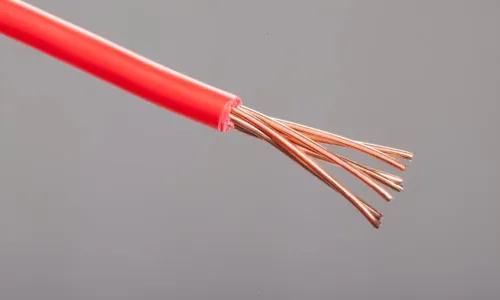
Flexible copper conductor construction can make routing and installation easier.
For automotive and EV manufacturers, flexibility can also simplify repeated assembly where the cable needs to follow a predetermined path.
Insulation Must Suit the Environment
Battery cables may operate close to electrical equipment, mechanical components, heat sources, or other parts of a vehicle or machine.
Engineers should consider temperature, abrasion, moisture, oils, chemicals, and physical routing before defining insulation requirements.
Different applications may therefore need different cable constructions even when the electrical current is similar.
Termination Quality Is Essential
A suitable conductor can still perform poorly if the terminal connection is inadequate.
Lugs and terminals should match conductor size. Crimping should be controlled and mechanically secure.
OEMs purchasing prepared battery leads should define cable length, lug type, terminal dimensions, orientation where relevant, and any required protective components.
What EV Procurement Teams Should Specify
For repeat production, a battery cable specification can include:
- Conductor size
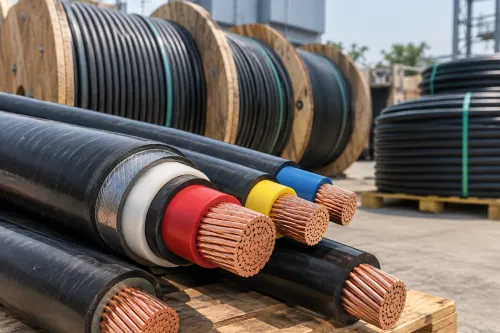
- Conductor construction
- Cable length
- Insulation requirement
- Maximum current
- Voltage requirement
- Terminal type
- Lug dimensions
- Required flexibility
- Environmental exposure
- Testing requirements
- Production quantity
An approved drawing or physical sample can further reduce interpretation errors.
Automotive, EV, electrical equipment, and industrial manufacturers operating in Delhi NCR increasingly require repeatable electrical components suited to production environments. Radicon manufactures wires and cables in Delhi for different electrical applications, including requirements relevant to battery connectivity.
Battery wiring should never be selected only because a cable appears thick enough. Actual conductor area, cable length, current, insulation, flexibility, connection resistance, and termination quality all influence performance.
For OEM procurement, defining these parameters before volume production can reduce assembly issues and help ensure that every supplied battery wire matches the intended electrical system.
Keywords