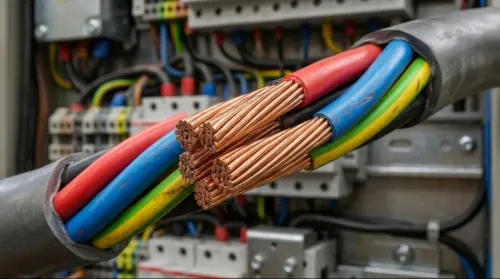
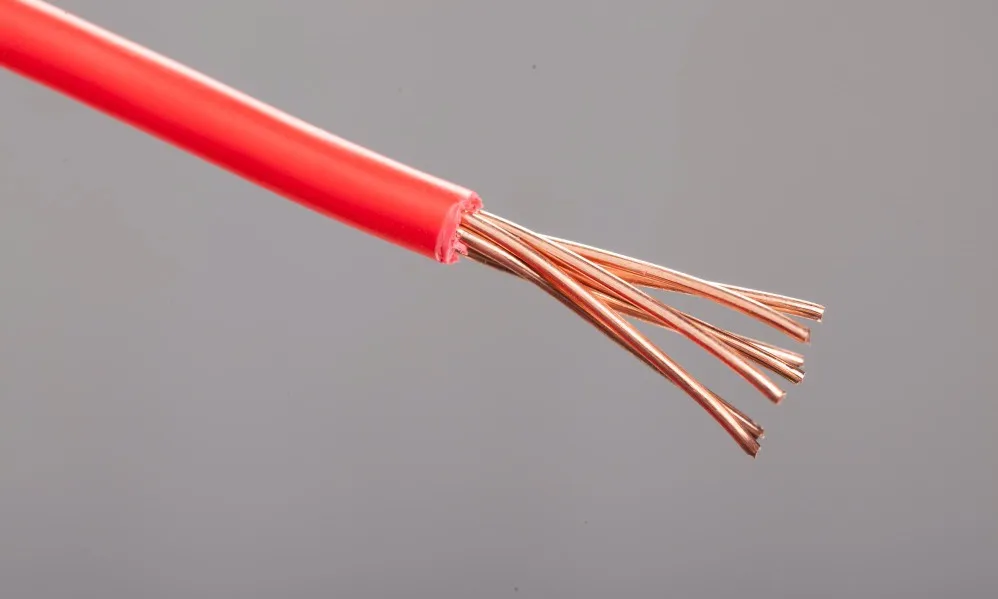
Flexible Copper Cables are widely used in electrical panels, industrial machinery, equipment manufacturing, power connections, control systems, and OEM assemblies. Their flexibility can simplify routing and termination, but procurement teams still need to verify whether a particular cable construction is suitable for the intended electrical load and installation environment.
A technically structured supplier evaluation can prevent expensive specification mistakes.
Verify the Actual Conductor Specification
Do not judge a cable only by its outside diameter.
The outer dimensions include insulation and sheath materials, while electrical performance depends significantly on the conductor.
Procurement documents should clearly state the required conductor material, nominal cross-sectional area, and construction.
Understand the Required Flexibility
Not every application needs the same degree of flexibility.
A cable installed once inside a panel has different mechanical requirements from wiring that needs frequent bending or movement.
Buyers should explain how the cable will be installed and whether it will remain stationary after installation.
This helps prevent unnecessary over-specification.
Confirm Electrical Ratings
Before approving a cable, check:
- Operating voltage
- Expected current
- Cable length
- Permissible voltage drop
- Ambient temperature
- Installation method
Engineering teams should determine the required conductor size rather than allowing price considerations to drive sizing decisions.
Review Insulation Requirements
Insulation should suit the conditions surrounding the cable.
Industrial environments may involve heat, moisture, oils, chemicals, abrasion, or confined routing.
A cable that works well inside a protected electrical cabinet may not necessarily be appropriate for a harsher environment.
The application should therefore determine insulation requirements.
Check Termination Compatibility
Flexible conductors must connect correctly with the equipment they serve.
Procurement and engineering teams should verify compatibility with lugs, ferrules, terminals, connectors, glands, and other connection hardware.
Cable diameter should also fit available routing and entry points.
Evaluate Samples Before Large Orders
For OEM production or substantial project quantities, sample evaluation can be useful before commercial release.
Teams can check:
- Cable dimensions
- Flexibility
- Stripping characteristics
- Termination compatibility
- Routing behaviour
- General construction consistency
Where required, technical testing should also be completed according to the project's specification.
Assess Repeat Supply Capability
A supplier should be evaluated not only on the first batch but also on the ability to maintain agreed specifications.
Repeated variation can create difficulties for OEMs using standardized terminals, automated cutting equipment, cable glands, or predefined routing spaces.
Procurement managers should therefore discuss tolerances, batch requirements, packaging, documentation, quantities, and delivery schedules before finalizing ongoing supply arrangements.
Selecting a Manufacturer in Delhi
Delhi's electrical market serves panel builders, contractors, distributors, automotive businesses, infrastructure companies, and industrial manufacturers. Buyers often need a combination of technical suitability and predictable commercial supply.
Radicon is a Delhi-based manufacturer serving wire and cable requirements across different electrical and industrial applications.
Before choosing a flexible copper cable manufacturer, procurement teams should prepare a specification rather than requesting a quotation using only a product name. Clearly defining conductor size, electrical ratings, flexibility, insulation, dimensions, operating environment, termination requirements, quantity, and testing expectations creates a much stronger basis for supplier comparison.
The right flexible copper cable is the one that fits the electrical system, installation method, connection hardware, and operating conditions without unnecessary over-specification. A disciplined technical evaluation helps procurement teams achieve that balance while supporting reliable and repeatable industrial installations.
Keywords