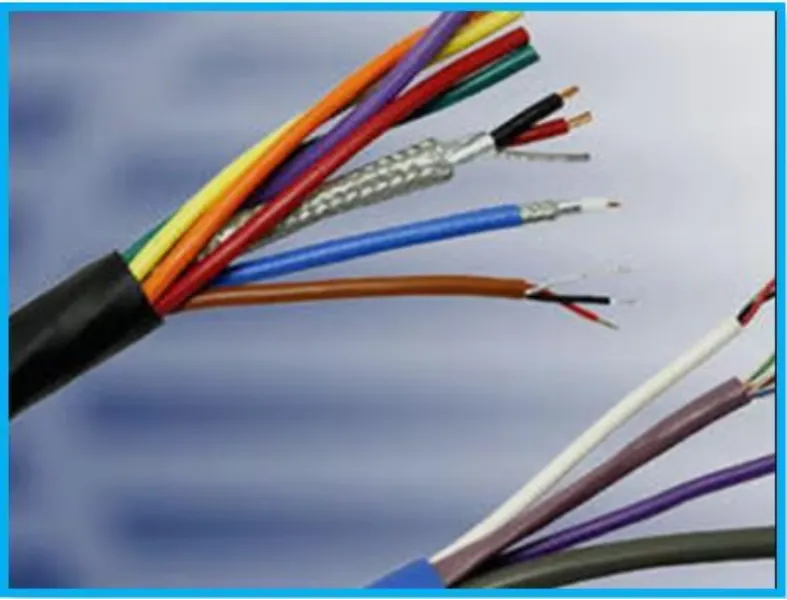
Industrial equipment frequently requires cables that can be routed through control cabinets, machinery, electrical assemblies, and confined installation spaces. Round Flexible Copper Cable is commonly considered where current-carrying capacity needs to be combined with practical flexibility.
However, flexibility alone should never determine cable selection.
Start With Current Carrying Requirements
The conductor must be sized for the expected electrical load.
If the conductor is undersized, excessive heating and voltage drop may occur. An unnecessarily large conductor can increase cost, weight, and routing difficulty.
Engineers should determine cable size based on load current, cable length, ambient conditions, installation method, and applicable design requirements.
Understand What Creates Flexibility
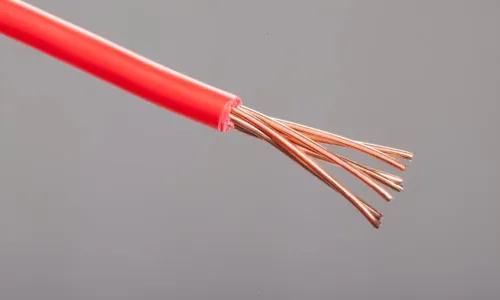
Flexible copper conductors generally use multiple strands rather than a single rigid conductor.
The number and arrangement of strands influence how easily the cable can bend.
This can be useful in machinery where cable routing involves bends, limited space, or connections that need easier positioning during assembly.
However, applications involving continuous repetitive movement may require cable construction specifically designed for dynamic duty. 'Flexible' should not automatically be interpreted as suitable for every moving application.
Check the Outer Diameter
Overall cable diameter can affect installation more than procurement teams expect.
A cable that is electrically suitable but physically too large can create problems with glands, conduits, connectors, routing channels, and equipment enclosures.
Design teams should therefore verify both conductor size and finished cable dimensions.
Match Insulation With the Environment
Industrial cables can encounter very different conditions depending on where equipment is installed.
Before ordering, consider temperature, moisture, oil exposure, abrasion, chemicals, sunlight, and mechanical contact.
The insulation and sheath construction should be suitable for the expected environment.
Consider Termination Requirements
Highly flexible conductors contain multiple strands, so correct termination becomes important.
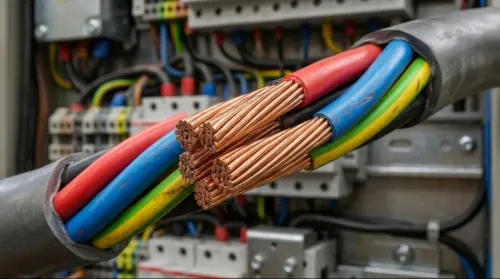
Terminals, lugs, ferrules, and connectors should match the conductor size and construction. Proper stripping and crimping practices help maintain connection quality.
For OEM production, standardized termination procedures can improve consistency.
Compare Suppliers Using Technical Parameters
Procurement managers should compare:
- Actual conductor specification
- Nominal conductor area
- Strand construction
- Insulation material
- Overall diameter
- Electrical rating
- Flexibility requirements
- Testing documentation
- Quantity capability
- Delivery requirements
This prevents misleading comparisons between cables that share a similar product description but differ technically.
Industrial manufacturers and panel builders across Delhi source flexible cables for machinery, electrical panels, control equipment, and OEM assemblies. Radicon manufactures wires and cables in Delhi for different electrical applications and customer categories.
Selecting round flexible copper cable begins with engineering requirements rather than catalogue descriptions. Current, voltage drop, flexibility, dimensions, insulation, environmental exposure, and termination method should all be considered together.
A clearly documented specification helps engineering, purchasing, production, and the cable manufacturer work from the same requirements, reducing avoidable mismatches during installation and repeated production.
Keywords