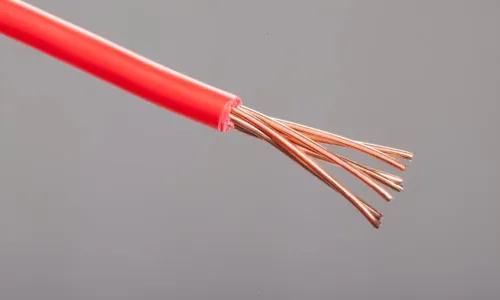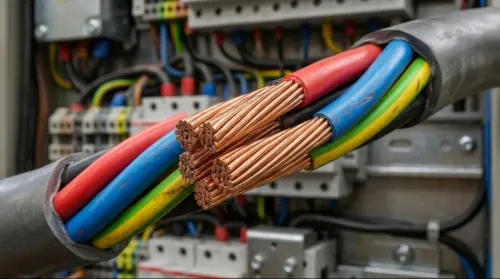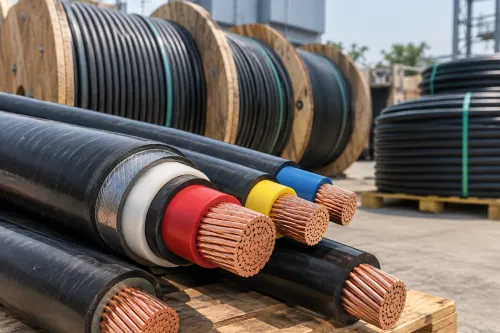
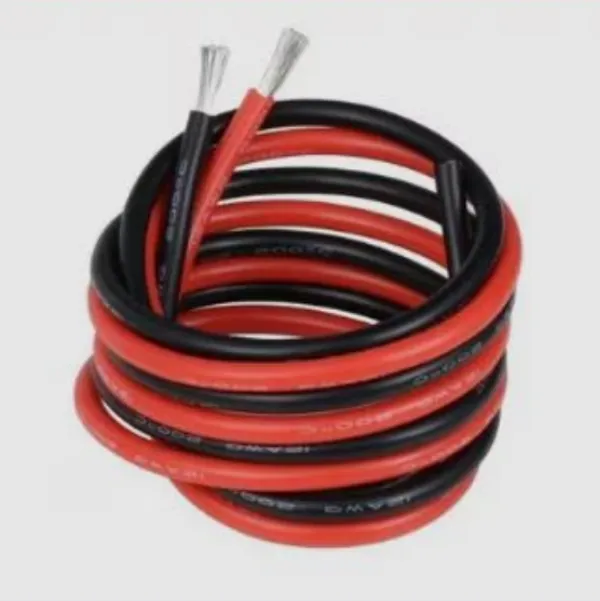
Standard electrical cables work effectively in many environments, but some industrial applications expose wiring to temperatures and operating conditions that conventional insulation may not be designed to tolerate. Silicone Rubber Cables are considered where flexibility and temperature performance are important requirements.
Understanding where these cables make sense helps manufacturers avoid both under-specification and unnecessary cost.
Why Silicone Rubber Is Used
Silicone rubber can provide useful flexibility and thermal characteristics for specialized electrical applications.
This makes silicone-insulated cables relevant to equipment operating near heat sources or where the cable needs to remain flexible under challenging conditions.
Potential applications can include industrial heating equipment, electrical appliances, control systems, lighting equipment, machinery, and specialized OEM assemblies.
Actual suitability should always be verified against the cable specification.
Heat Is Not the Only Selection Factor
A common mistake is selecting silicone cable simply because an application is described as 'high temperature.'
Engineers should also consider:
- Operating voltage
- Continuous current
- Maximum expected temperature
- Conductor size
- Required flexibility
- Mechanical exposure
- Installation space
- Chemical exposure
- Termination requirements
A cable that performs well thermally still needs appropriate electrical and mechanical characteristics.
Flexibility Can Help Equipment Designers
Cable routing inside machines can be difficult where space is limited.
Flexible conductor construction combined with suitable insulation can make installation easier around equipment components and confined routing paths.
This is particularly relevant for OEMs producing equipment repeatedly. Predictable cable dimensions and flexibility can make assembly processes more consistent.
Compare the Complete Cable Specification
When evaluating silicone cables, procurement teams should not compare products only by conductor size.
Two cables may have the same nominal cross-section while differing in conductor construction, insulation thickness, voltage rating, temperature capability, overall diameter, and flexibility.
A specification-based comparison produces a more meaningful purchasing decision.
Avoid Unnecessary Over-Specification
Silicone rubber cable is useful where its properties solve a genuine operating requirement. It should not automatically replace conventional wiring in applications where standard cable construction is already appropriate.
Over-specification increases material cost without necessarily improving system performance.
The correct approach is to identify the actual temperature, electrical load, environmental exposure, and movement requirements first.
Procurement Considerations for Delhi Manufacturers
Delhi and the surrounding industrial region support manufacturers of electrical equipment, appliances, panels, machinery, automotive components, and specialized industrial products.
OEM procurement teams in this market often require cable manufacturers capable of supplying specifications consistently across repeated production batches.
Radicon manufactures wires and cables in Delhi for a range of electrical requirements. For specialized cable applications, providing detailed operating parameters helps manufacturers recommend construction based on engineering needs rather than assumptions.
Silicone rubber cables are most valuable when an application genuinely requires their combination of thermal performance and flexibility. Proper selection begins by defining operating temperature, voltage, current, installation conditions, conductor construction, and mechanical requirements.
That approach helps manufacturers obtain a cable suited to the equipment instead of simply choosing a more specialized material than the application requires.
Keywords